The past week has been heavy with announcements across the AI world. OpenAI dropped its proposed AI action plan for policymakers, pushing forward its stance on responsible development. Deloitte has launched its new agentic AI system, called Zora AI, which combines enterprise logic with autonomous agents in a fresh, production-ready way.
Then Nvidia's GTC 2025 conference added fuel to the fire by laying out the future of AI chips, robotics, and simulation tech in bold detail. These weren't just press drops — they reflect how much the field is reshaping itself around safety, autonomy, and scale. So what do these updates actually mean? Let’s break them down.
OpenAI’s AI Action Plan: Rules Before Race
OpenAI's proposed AI action plan is meant to guide national and international regulation. Rather than resisting guardrails, OpenAI is pushing governments to get involved early, especially in areas such as frontier model testing, misuse prevention, and coordinated safety research. One major point is OpenAI's call for a global AI oversight body, much like the IAEA in nuclear policy. It isn't lobbying for total control but rather for shared tools, including red-teaming protocols, incident reporting standards, and compute governance.

The company appears to be aware that trust is wearing thin in some areas. This document serves as both a proposal and a defense. It sets the tone for how OpenAI wants to be seen: proactive, technically grounded, and aligned with public goals. Still, critics argue that many of the action plan items place the burden on governments without giving enough transparency from OpenAI itself. For instance, while the plan promotes "model evaluations," it remains vague about what internal tests it already conducts and which results will be made public.
In practical terms, this is the kind of plan that governments may pick apart over the next year, especially as international AI governance efforts like the UN’s AI Advisory Body and the EU’s AI Act begin formal rollouts. It positions OpenAI not just as a developer of AI models, but as a central voice in deciding how AI should be governed.
Deloitte's Zora AI: Moving Agentic Systems Into the Enterprise
Deloitte’s Zora AI isn’t just another model integration — it’s an operational platform built for enterprise use cases using autonomous agent-style reasoning. Instead of issuing responses to questions or commands, Zora AI chains goals across systems and executes them. Think customer support bots that not only answer questions but update records, reroute cases, and summarize issues across departments without manual intervention.
Zora AI sits at the intersection of traditional business logic and autonomous agent frameworks. It takes cues from earlier academic efforts like Auto-GPT or BabyAGI but grounds them in compliance-heavy environments like finance and healthcare. The platform offers both natural language interfaces and backend APIs, meaning a human operator could say “Generate an onboarding report for all new hires this quarter,” and Zora would autonomously gather the data, check it against rules, and produce a formatted document — all while documenting each step.
This is where Zora AI differs from standard large language model deployments. It isn’t just reactive. It acts like a junior analyst — one that doesn’t need handholding. Deloitte has positioned Zora AI as a bridge for companies nervous about adopting raw LLMs. It wraps agentic behavior inside a governance framework that enterprises can audit and tweak. That balance between autonomy and oversight is what sets it apart.
Zora AI's rollout includes support for major cloud providers, and it uses fine-tuned LLMs on structured and unstructured data sources. It’s still early, but pilot tests are already showing reduced overhead in back-office workflows and faster customer turnaround times in service-heavy industries.
Nvidia GTC 2025: Where Hardware Meets Future Intelligence
The 2025 edition of Nvidia’s GPU Technology Conference (GTC) didn’t disappoint. AI hardware was the centerpiece, but the broader message was clear: if AI is the brain, Nvidia wants to be the nervous system. CEO Jensen Huang emphasized that the next era of AI won’t be defined solely by smarter models — it’ll be shaped by faster training pipelines, simulation platforms, and integration with robotics and digital twins.
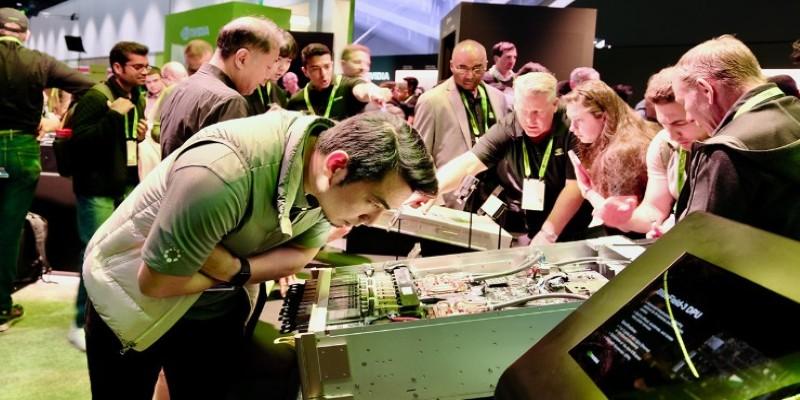
Nvidia introduced the Blackwell Ultra chip line, claiming a 2.5x efficiency boost over the previous H100 generation. These chips are tuned for massive transformer workloads and offer enhanced memory bandwidth to support growing model sizes. The company also teased new networking hardware meant to reduce latency in multi-GPU clusters, which is critical for training systems like GPT-5 or Claude.
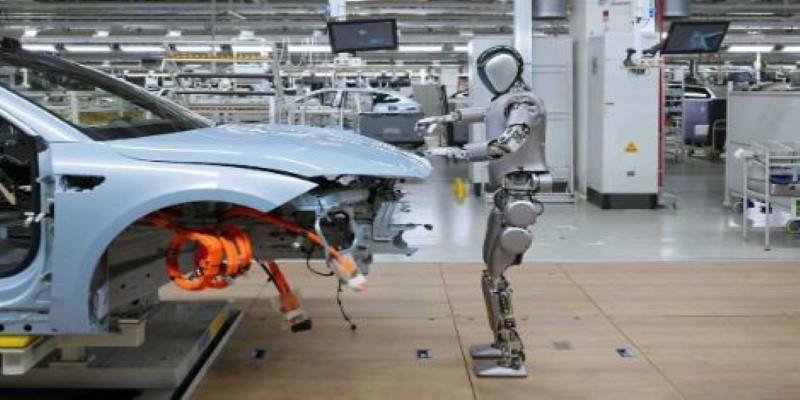
Alongside chip updates, Nvidia rolled out enhancements to its Isaac and Omniverse platforms. Isaac now supports more advanced robot training via photorealistic simulation environments, which helps shrink real-world trial time. Omniverse, meanwhile, is being pitched as a full-stack tool for industrial digital twins. Think factory simulations, logistics planning, and collaborative AI agents all running in sync.
Perhaps most telling was how Nvidia framed its goals. Rather than hype individual tools, the message was ecosystem-first. This makes sense: no matter how good an AI model is, it won’t scale if the underlying infrastructure can’t keep up. GTC 2025 made a strong case that Nvidia isn’t just selling GPUs — it’s building the pipes for tomorrow’s AI economy.
A Week That Signals the Next AI Phase
OpenAI, Deloitte, and Nvidia are shaping different parts of the same AI shift. OpenAI is focused on setting rules, while Deloitte is building agent-driven systems like Zora AI for real-world use. Nvidia is powering it all with faster chips and smarter infrastructure. The direction is clear: AI's future isn't about one breakthrough. It's about smart systems that act on their own, follow the rules, and scale smoothly. This past week's updates showcase a more coordinated and mature phase of AI—less flash, more function. The groundwork is being laid. Now it's time to see how well it all fits together.