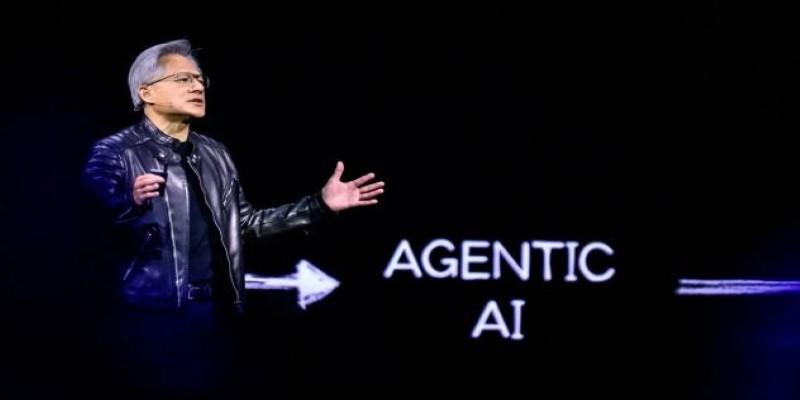
The buzz around Nvidia GTC 2025 had been building for months, but no one quite expected Deloitte—a company better known for its tax, audit, and consulting services—to be the one to disrupt the AI narrative. That's exactly what happened with the reveal of Zora AI, Deloitte's new agentic AI platform. It's not just another chatbot or automation tool. Zora aims to act like a digital executive assistant with strategic thinking skills.
Positioned as a major leap toward operational autonomy, it puts Deloitte in the spotlight of enterprise AI, alongside companies like Nvidia and OpenAI. But what does agentic AI really mean in this context, and why are people calling Zora one of the most pragmatic uses of AI shown at the conference?
The Rise of Agentic AI in the Enterprise World
“Agentic AI” isn’t just another tech buzzword. It refers to AI systems capable of making decisions and taking actions independently while staying aligned with predefined goals. These systems aren’t reactive—they’re proactive. Zora AI fits squarely in this space. Built on top of Nvidia’s latest enterprise-grade hardware and optimized for their accelerated computing stack, Zora isn't just fast. It's structured to understand business contexts and make autonomous decisions within guardrails set by leadership.
At its core, Zora is designed to manage complex enterprise workflows. It extends beyond automating tasks such as scheduling and report generation. It can identify performance bottlenecks, suggest strategic shifts, and even draft quarterly plans based on real-time data inputs. Think of it as having a junior partner in the room who never sleeps and has read every file in your company’s data lake. That’s the real draw—Zora isn’t replacing people; it’s meant to take off the mental load executives and managers face every day.
What sets Zora apart from existing LLM-based assistants is its deep integration with business operations. It can speak to ERP systems, communicate with CRM tools, and even coordinate with finance modules—all while keeping context intact. This gives it agency not just in language but in execution as well.
Built on Nvidia’s Architecture, but Geared for Decision-Making
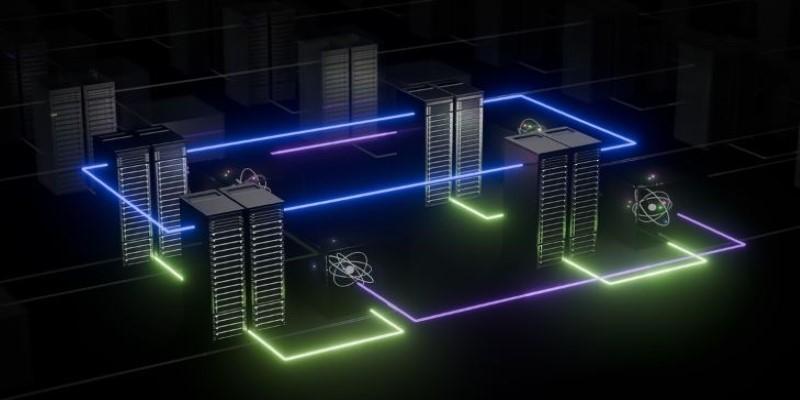
Zora didn't arrive in a vacuum. Deloitte has been quietly collaborating with Nvidia for over a year to fine-tune this platform for enterprise-grade tasks. Nvidia's GTC 2025 stage provided Zora with a formal introduction, but the real story lies in its backend. It runs on Nvidia's latest Blackwell architecture and uses CUDA acceleration for real-time decision processes, allowing it to analyze, respond, and act on massive datasets in milliseconds.
While Nvidia's AI focus has traditionally leaned toward autonomous machines, robotics, and digital twins, Zora represents a different angle—autonomous decision-making in business environments. That's where the partnership makes sense. Deloitte brings business logic and domain knowledge. Nvidia provides the scale and compute. Together, they're making AI not only intelligent but also reliable in corporate use cases.
Zora AI includes built-in alignment frameworks. This means executives can define what "good decisions" look like, and Zora calibrates itself to those benchmarks. It's not just pattern matching; it's guided reasoning. This helps avoid the classic AI problem of hallucination or misaligned outputs—key for industries such as finance, logistics, and healthcare, where compliance and precision are non-negotiable.
Use Cases That Actually Matter
Where Zora truly shines is in real-world applications. At GTC, Deloitte showed a demo from a Fortune 500 supply chain operation. Zora noticed repeated disruptions in raw material flow and proposed alternate suppliers in under a minute. It didn't just generate options—it evaluated risk, delivery timelines, cost variables, and ESG compliance, then delivered a ranked list with justification.

Another use case came from the HR department of a global tech firm. Zora scanned resignation patterns, internal chat sentiment (privacy-compliant), and productivity metrics to forecast which departments were most at risk of talent attrition. It then suggested targeted engagement strategies tailored by geography and role.
These aren’t tasks you’d typically associate with one AI platform. But that’s the point. Zora isn’t a product—it’s an infrastructure built to think like a strategist and act like a manager. And by using Nvidia’s hardware for real-time performance, Deloitte avoided the usual pitfalls of laggy AI response or disconnected outputs. Zora doesn’t ask “What do you want me to do?” It says, “Here’s what’s happening, and here’s what we should do about it.”
What Zora Signals About the Future of AI in Consulting?
Consulting firms have always sold advice. Now, they're starting to offer tools that can deliver advice without human involvement. Zora reflects Deloitte's vision for that future. Instead of billable hours, it's selling judgment in a box. That shift comes with risks. There are clear questions about trust, oversight, and liability. Deloitte isn't presenting Zora as flawless. It's described as a collaborator, working alongside humans and deferring to them for final approval when needed.
Internally, Deloitte teams have been piloting Zora since late 2024. Early results suggest measurable boosts in project delivery speed and executive satisfaction. That’s not surprising. Having an AI that understands the flow of a business meeting, tracks tasks across platforms, and reports results autonomously is a massive relief in high-pressure environments.
From Nvidia’s perspective, Zora is another showcase of what can be done with their ecosystem beyond the flashy demos. It proves that AI can be quiet, thoughtful, and useful in day-to-day decisions, not just science fiction.
The industry is watching closely. Accenture, EY, and McKinsey are all rumored to be developing their agent-based systems. However, Deloitte's first-mover advantage allows it to refine Zora and establish client trust before the floodgates open.
Conclusion
Zora AI from Deloitte skips flashy gimmicks for real-world usefulness. Unveiled at GTC 2025, it shows how AI is shifting from spectacle to a practical tool. With Nvidia's processing power and deep enterprise integrations, Zora focuses on helping people work smarter and collaborate better. Its understated design hides a system built for everyday productivity, not hype. Deloitte's move highlights a broader trend: companies now value AI that delivers meaningful results over empty showmanship. That focus on utility could make Zora a lasting presence in the workplace.