Big tech doesn't wait around, and Amazon is proving that yet again. With a staggering $10 billion investment aimed squarely at boosting its AI and cloud capabilities, the company is zeroing in on North Carolina as the place to build out its vision. Specifically, two data center campuses in the town of Holly Springs and another in nearby Garner are in the pipeline. It's not just a headline-grabbing move—it’s a clear signal that Amazon is planning for something much bigger, and soon.
What This Means for Amazon's AI and Cloud Ambitions
Amazon Web Services (AWS) has long dominated the cloud scene, but lately, the competition has been heating up. Microsoft is making aggressive strides with Azure, and Google Cloud is pushing hard on its AI credentials. Amazon’s North Carolina expansion isn’t just about keeping up—it’s about resetting the pace.
By anchoring two new campuses in the region, Amazon is a long-term infrastructure rather than quick tech plays. These aren’t lightweight facilities. We're talking about high-performance data centers—optimized for machine learning workloads, built to support rapid scaling, and most importantly, designed to run the next generation of AI models. This isn’t just adding to AWS’s muscle—it’s reshaping its backbone.
The timing couldn’t be sharper. With demand for AI compute power exploding—think large language models, enterprise automation, and synthetic data—the need for physical infrastructure has outgrown the capacities of existing sites. Amazon’s response? Go where the power is cheap, the talent is growing, and the opportunity stretches years ahead.
Why North Carolina?
You don’t spend $10 billion on a whim. Amazon’s choice of North Carolina follows a very deliberate pattern. The state offers a mix of technical talent, available land, and—let’s be honest—favorable tax incentives. But it’s more than just a smart financial call.
The Triangle region, which includes cities like Raleigh and Durham, has slowly evolved into a magnet for tech innovation. The presence of top-tier universities—like Duke, UNC-Chapel Hill, and NC State—has created a steady pipeline of engineers, computer scientists, and cloud specialists. Local community colleges have also adapted quickly, offering data center training programs to meet industry demand.
Beyond talent, there's infrastructure readiness. Local governments have streamlined zoning approvals, and there's a clear alignment between public leadership and long-term tech growth. Add in the state’s competitive energy prices and land availability, and you’re looking at a place ready-made for hyperscale development.
And then there’s energy. Running massive data centers isn’t cheap, and the energy mix matters. North Carolina's blend of renewables and stable power pricing makes it ideal for high-efficiency operations. AWS has committed to 100% renewable energy usage by 2025, and these new sites will play directly into that goal.
A Timeline That Speaks Volumes

One of the more telling details in this investment is the timeline. Amazon isn’t spreading this spend over a few decades—it’s committing to the bulk of the investment by 2040, but key phases are set to happen much sooner. What makes this move stand out isn’t just how fast it’s happening, but how precise the planning is. Site preparation, utility coordination, and vendor contracts are already in motion—Amazon isn’t experimenting here; it’s executing. The speed signals confidence in where the market is headed and what AWS intends to offer next.
The Holly Springs campus is already in development, and local approvals have cleared the way for fast-tracked construction. The Garner location isn’t far behind. In other words, this isn’t an abstract, “sometime-in-the-future” plan—it’s unfolding now.
From land grading to electrical infrastructure to server deployment, these facilities are being designed with AI workloads as their core purpose. That’s a significant shift. Earlier data center expansions were generally broad-purpose. This time, the specs are narrower, the goals more focused, and the stakes much higher.
What Else Comes with a $10B Tech Investment?
Big spending always attracts attention, but what often gets overlooked is what follows in its wake. For Holly Springs and Garner, the economic impact won’t be confined to Amazon’s gates.
Construction jobs are the first wave, but what follows is longer-lasting: network engineers, systems architects, on-site security staff, maintenance technicians, and HVAC specialists. And those roles support secondary markets—housing, retail, local services—that ripple through the economy.
It's worth noting that Amazon isn't walking into a vacuum. Both towns have seen growing interest from tech companies in recent years. Amazon's entrance will likely set a new precedent for land value, regional job creation, and infrastructure development, especially when it comes to fiber connectivity and power grid upgrades.
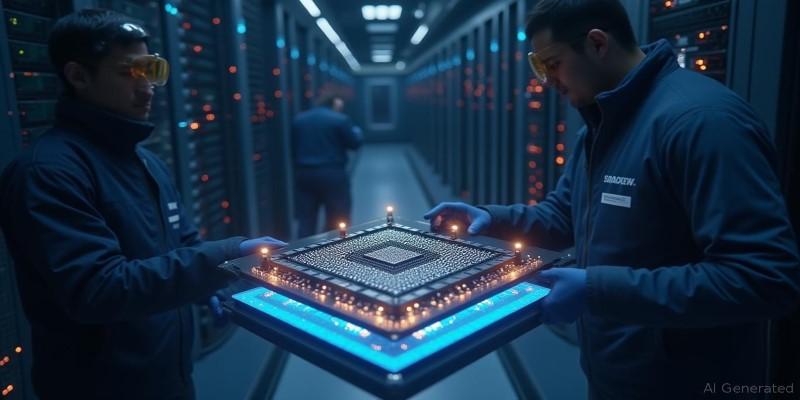
There’s also a competitive edge here for AWS. The company is clearly aligning physical resources with future product strategies. Large-scale AI models demand not just GPU clusters, but entire facilities that can accommodate dense server racks, advanced cooling systems, and highly redundant networks. With this investment, AWS is pre-loading capacity for services it hasn’t even announced yet.
Closing Thoughts
Amazon doesn’t just follow trends—it builds the roads others drive on. A $10 billion commitment to AI and cloud expansion in North Carolina signals far more than another set of server farms. It tells us where Amazon sees the center of gravity shifting—and how it plans to own that space before anyone else.
In choosing Holly Springs and Garner, Amazon isn't just planting roots; it's laying the groundwork for a future where AI infrastructure is as essential as electricity or water. It’s a bet on data, on compute, and on the people who will build and run the systems behind tomorrow’s tech. As always with Amazon, the details are strategic, the timeline is aggressive, and the message is clear: it’s already moving faster than most companies can react.